
Yablonsky was an adventurous young sociologist who immersed himself in Synanon from 1961 to 1965. His research transcended the academic protocols of objective and subjective. His engrossing book, Synanon: The Tunnel Back, published in 1965, is as intimate as it is accurate. His unconventional, intensely personal relationship with Dederich and the vivid oral histories of dozens of ex-addicts make the book a page-turner. (Yablonsky had a seventeen-year marriage with an ex-addict he met at Synanon.) At a remove of forty years, in 2002, Yablonsky published an article— Whatever Happened to Synanon? —in the Criminal Justice Policy Review:20, see below.
You Had to Be there.
Whatever Happened to Synanon?
The Birth of the Anticriminal Therapeutic Community Methodology.
By Lewis Yablonksy
Around the turn of the 20th century, a millionaire philanthropist, Abbot Kinney, became enamored with the apparent beauty of Venice, Italy. He had the financial resources and motivation to attempt to replicate his dream of the legendary city along the beachfront area of Los Angeles, California. Kinney’s city by the sea, later known as Venice, California, never came close to the magnificence of the Italian version. Venice, California, however, became a radical haven and home for many alienated people. In this cauldron of radical intellectualism were bohemian poets, writers, artists, rebels, and visionaries of all types. In this cultural potpourri were many individuals who had artistic communal aspirations.
Among this group, in this revolutionary open-culture beach area, was Charles E. Dederich, a former business executive an ex-alcoholic, and ardent member of Alcoholics Anonymous (AA). In 1958, he was collecting unemployment checks and living, like so many others, the life of a bohemian in a small apartment in the area. He had benefited from AA and believed that the methodology of AA should be extended into a residential setting where alcoholics and drug addicts could live together and help each other clean up their lives in a drug-free community. The methodology of this first therapeutic community (TC), in part, involved a variety of therapy groups. One day, in the new community he was sculpting, Chuck overheard a recovering addict mangle the words symposium and anonymous and blurt out the word Synanon. From then on, the community was referred to as Synanon. The original Synanon community experiment originated by Charles E. Dederich in 1958 had a total life span of around 35 years. I was intimately involved with the first decade of the organization, or what is now referred to as Synanon One.
I first heard about Synanon in 1960 from the University of California, Los Angeles (UCLA), sociologist Donald Cressey at a London United Nations Congress on criminology where I was presenting a paper on violent gangs. He told me that the program run by Dederich had resulted in having about 60 former hardcore criminal/addicts living with him and staying clean in a beach house in Santa Monica. This was intriguing to me as a criminologist who had been working with criminal addicts and violent gangs in New York City with limited success. At that time, there were very few effective treatment projects for criminal/addicts. If a part of what Cressey told me about Synanon was true, there was indeed what U.S. senator Thomas Dodd later on in 1965 called “a miracle on the beach.” When I was invited by Cressey in 1961 to leave my job at the University of Massachusetts–Amherst to teach at UCLA, I jumped at the opportunity largely to research “the miracle.”
From 1961 to 1966, I spent a good part of almost every day at Synanon. Being intimately involved with interesting people—former hardcore criminal/addicts who were in the process of changing their existences from dying to living—was an exhilarating experience. I found participating in and studying the process that Chuck and his two major assistants (Bette, Chuck’s wife, and Reid, his number one sidekick) were developing on a day-to-day basis was pure excitement. And within a month or so of my participation, I was accepted into the inner circle of this dynamic and intellectually stimulating group. In short order, I became “research director” and a member of the early board of directors.
My first published book, based on my research and work with gangs in New York, The Violent Gang (Yablonsky, 1962), was completed in the inspiring and then intellectually stimulating atmosphere of Synanon One. In fact, in the last chapter of my gang book, I wrote about the impressive and successful treatment of two New York addicts Zev Putterman and Frankie Lago, a former gangster in Synanon. I was convinced that this new methodology was a clear breakthrough in my field, and it changed my attitude and method of teaching criminology.
Prior to my first involvement with Synanon in 1961, as a professor of sociology at several major universities, including the University of Massachusetts, Harvard, and Columbia, when teaching criminology I always opened my courses by stating my then basic viewpoint on crime: “I feel like I am lecturing on navigation as the ship sinks slowly into the sea.” As a result, of my positive Synanon experience, my pessimism turned to optimism about what could be accomplished with a serious American problem.
The results of my first 5 years in Synanon were published in my book The Tunnel Back: Synanon (Yablonsky, 1965). The book delineated the structure of the Synanon One methodology as an anticriminal society and a clear breakthrough in the process of effectively treating criminal/addicts. During the period of researching and writing my book and for a couple of years after (1961-1967), I was at Synanon almost every day participating in the games, the seminars, and other activities. Most of my close friends at that time were in Synanon. Chuck often attempted to cajole me into moving into Synanon. I resisted for two reasons: I was an extreme maverick who was happy with my wonderful life as a single man in the wilds of Southern California, and I had closely observed the early stages of Chuck’s autocratic personality that became manifest in his later controlling behavior as CEO of Synanon.
Moreover, as a free spirit, I was never interested in becoming part of any special community. In fact, I was somewhat turned off by the dream of a utopian community that began to form with an influx of nonaddicts, referred to as “squares” who were attracted to and began to flood into the Synanon experiment by moving into the community—often with their financial largesse. I was primarily interested in the anticriminal society methodology that was successfully treating the criminal/addict population of Synanon. In retrospect, I turned out to be correct in my analysis. The utopian dream community turned weird and crashed, and the criminal/addict treatment dimension of Synanon has flourished in a variety of spin-offs of Synanon in the United States and around the world, especially in Europe.
In 1966, I became involved in writing a book on the burgeoning American hippie phenomenon and only sporadically visited Chuck and my other pals at Synanon. Chuck and I were good friends, and we always shared our intellectual viewpoints and our work. One important contribution to my book The Hippie Trip (Yablonsky, 1968) on the subject was a chapter I wrote based on an interview with Chuck titled “CED on LSD.” In this chapter, Chuck, who was always cooperative in sharing his wisdom with me, went into detail about his belief that his participation in an LSD research project directed by UCLA’s Dr. Sidney Cohen helped to change him from an alcoholic to the founder and guru of Synanon.
By 1968, my relationship with Synanon involved only an occasional drop-in to see Chuck, Reed, Bette, and my other pals at Synanon. The organization began to shift gears into what was referred to by Chuck as Synanon Two. This involved the move-in of hundreds of nonaddicts, who joined the ex-addict residents in a search for a utopian community—and that’s when the whole thrust of the anticriminal society that I identified with and wrote about changed. In its later years, it developed into an organization that involved some very bizarre experimentation. In my opinion, the “anticriminal society” that later became known as the “therapeutic community” had become a worldwide roaring success, and the utopian community dream became a disaster (see Janzen, 2000).
Janzen’s (2000) book touches on the criminology breakthrough created by Synanon that I wrote about in my book that Chuck always referred to as “The Tunnel.” In a sense, Janzen’s book picks up where my book ends and delineates in graphic and dramatic form what happened in and to Synanon when it took on the world as a deliberate utopian lifestyle. Janzen interviewed more than 100 people who experienced various phases of Synanon as it declined into a cult-like community.
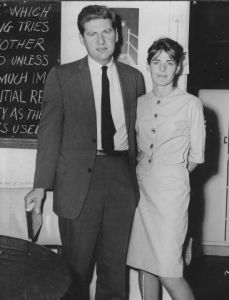
I wrote my book The Tunnel Back: Synanon (Yablonsky, 1965) as an insider in Synanon. On an important personal level, I became a good friend of Chuck Dederich and most of the early gang. In Synanon, I met a beautiful woman named Donna. She had been a criminal/addict who was an early Synanon graduate. I fell in love with her, we married, and we lived together for 20 years. Our family was enriched by the addition of my wonderful son, Mitch, who is today my best friend.
As a social scientist and insider, I was Synanon’s director of research and contributed to the development of the TC aspect of Synanon. I helped hone the concept and distribute it as an effective methodology for changing criminal addicts in the United States. I directed about 40 workshops around the world, especially in Europe (The Tunnel Back was published in German and Italian). I believe I helped spread the concept of the TC. My relationship with Synanon affected my approach as a psychotherapist. From my insider viewpoint, many of my later books were heavily influenced by my Synanon experience, especially my two most recent books, Gangsters (Yablonsky, 1998) and Juvenile Delinquency: Into the 21st Century (Yablonsky, 2000).
Because of the Synanon experiment, thousands of former addicts no longer lead self-destructive lives. And many of the squares who joined the community had a dominantly positive experience that was heavily influenced by their profound Synanon life experience. Of note among them was Dr. Harold Benjamin, who founded the Wellness Community—an organization that helps cancer patients around the world. Many former Synanon participants learned the theory and methodology of Synanon and founded and developed TCs around the United States. Notable among these are Amity (Arizona and California), Walden House and Delancey Street (San Francisco), and Phoenix House and Daytop (New York). In Europe, CIES (Italy), Synanon-Berlin and KETHEA (Greece) are outstanding TCs influenced by the original Synanon.
Many people who participated in and lived in Synanon during its utopian experiment became bitter after its demise about the death of the dream of the anticipated ideal community that Chuck had promised them. They were angry with Chuck, who had persistently presented them with his dream of a utopian community, and they felt that he let them down. The dream of utopia died, but almost everyone who invested their lives in the overall Synanon experiment benefited one way or another.
In this context, the 1952 film The Bad and the Beautiful—in my opinion, the best film ever made on Hollywood—parallels this negative aspect of the Synanon phenomenon. The movie in many ways is a metaphor of the Synanon experiment in that the film characterizes the story of Chuck Dederich and Synanon’s impact on a variety of people’s lives in both a bad and a beautiful way. (I do not recall the names of the characters in the movie, so I will take the liberty of identifying the main protagonists in the film by their screen names.)
In brief, the film tells the story of an enormously ambitious, talented, and borderline pathological filmmaker (a man much like Chuck), brilliantly played by Kirk Douglas. The charismatic producer played by Douglas claws his way up the Hollywood ladder with promises and dreams for the people who make the trip with him. Along the way, he both exploits and helps four important people in his life become enormously successful stars: a movie star (Lana Turner), a writer (Dick Powell), a director (Barry Sullivan), and a studio mogul (Walter Pidgeon). At first, they all loved him, and then their emotions turned to hate for the harm his enormous egocentric personality caused them in a variety of personal situations. What they all had in common was that, despite the downside of their lives created by Douglas, in the end they all benefited from their relationship with this sociopathic film genius.
The film begins with the characters sitting in a prototypical Hollywood producer’s office on a speakerphone talking to Kirk, who is in Europe. They have long abandoned him for varied reasons. At the time of the calls, he was relatively down and out, and he was trying to cajole them all to use their Hollywood powers into making one more film with him. At the beginning of his attempt at seducing them back into his orbit, they are all totally opposed to having anything to do with him. The story is told in flashbacks with each person. The flashback vignettes depict how Kirk helped and failed them in the past. In the last scene of the film, Producer Pidgeon tells them (as I recall and paraphrase the dialogue), “He really hurt us. Lana has won two Oscars.
Dick has won a Pulitzer Prize for writing. Barry has won three director Oscar awards. And here I am head of a major picture studio. What a rat!” In a metaphoric bad and beautiful fashion, Chuck and Synanon have helped and sometimes hurt people in the process of the rehabilitation of thousands of former criminal/addicts and squares who came in contact with the original Synanon during its 40-year history (1958 to 1997, the year Chuck died). As alluded to, the construct known as Synanon, with different names (except the very successful Berlin “Germany Synanon”), has been replicated in some form all over the world and has been responsible for tens of thousands of criminal/addicts’ no longer using self-destructive drugs and their metamorphosing into leading healthy, happy lives. This came about because Synanon One paved the way for thousand of other TC treatment organizations, more or less modeled after the original construct. In addition, most of the squares (nonaddicts) who were in Synanon that I have talked to at annual reunions miss the important role that Synanon played in enriching their lives.
As indicated, the concept and methodology of the original Synanon TC has been replicated in thousands of spin-off organizations in the United States and around the world. By 2000, there were several hundred TCs in the United States and hundreds of others throughout Europe (e.g., about 40 in Italy and 20 in Greece) and in Australia and Asia. These replications of the original Synanon method have been developed and modified to fit the cultural characteristics of different communities in the United States and societies around the world. To serve these groups, there is an organization with a membership of several hundred TCs in the United States known as Therapeutic Communities of America and a worldwide association named World Federation of Therapeutic Communities.
Based on my extensive research into Synanon and other TCs in the United States and Europe, I have concluded that Synanon’s TC process for training former addicts with long criminal backgrounds and prison experience to become effective therapists for younger delinquents, including gangsters, is the quintessential positive contribution of Synanon to society. For me, this most important contribution of Synanon of former addicts is understood in the role of what I have termed “experience therapists” (ETs)
In brief, the ex-criminal therapist who fits the definition of an ET has had the street experience of his client, cannot easily be outmaneuvered by him, and has a meaningful rapport with his client. The result is a communication that most professional therapists find difficult to establish with rebellious and often defiant offenders, who constitute the core of America’s crime problem. Synanon-like TCs utilizing ETs are more successful in treating
criminal/addicts than traditional approaches are. In general, preliminary research data on individuals released from TCs as compared to other treatment approaches reveal that the usual 65% repeater arrest rate has been reversed. About 65% of individuals released from TC programs in the community and in prison are successful in the open community and are not rearrested for at least 3 years.
In my recent book on delinquency, I delineate the ET as follows. Former criminal/addicts are uniquely qualified to become effective ETs for three important reasons. First, they have been through the throes and conflicts of their original problems. They know many of the rationalizations and self-deceptions that keep a person on the criminal merry-go-round: from the streets to jail, to prison, and back. They comprehend on a deep emotional level, from their own experience, what a criminal life is like. They have “been there” themselves.
Second, they have gone through the complex resocialization process of personal change in a TC program. They know, on a firsthand basis, the painful emotional crises and traumas of confronting their own lives more directly without the cloud of drugs to ease their pain. They have experienced the various phases of reorganizing their relationships with their families and friends. They have developed valuable coping mechanisms for dealing with the temptations of sliding back into their former states of existence and for breaking off relationships with former partners in crime. They have learned how to stay away from crime, drugs, and gangs and are succeeding as responsible citizens.
Third, as a result of these two sets of experiences, a past life as a criminal and firsthand knowledge about their recovery process, former offenders have usually developed some special insights and skills. They are not easily outmaneuvered or conned. They quickly acquire the respect of their clients because they can see through the rationalizations and ploys that they once used themselves. The result is a communication that has more therapeutic power than that usually achieved by more traditional professional therapists. These paraprofessionals also know from their day-to-day experiences the self-discipline required to continue to lead a crime- and drug-free life. In this context, former criminal/addicts have clearly acquired the necessary experience for becoming an ET. In summary, (a) ETs have had the street and prison “educational” background necessary for understanding the causal context of criminal/addict behavior on a personal level, (b) they have some surface and deep insight into the personal behavioral modification processes in a TC program that changed their own behavior into becoming law-abiding members of society, and (c) for a minimum of 5 years, they remain drug and crime-free and contribute in an ET role in helping young delinquents change their behavior in a TC setting.
As we enter the 21st century, I believe, Synanon and its thousands of replications have produced and given the world a methodology that in my opinion will revolutionize the treatment of criminal addicts in this century. The approach has already begun to change the American prison system with about 15 prison TC programs in prisons around the United States, especially in the California and New York State Departments of Corrections.
In my role as the author of the first book on Synanon, The Tunnel Back (Yablonsky, 1965), people often confront me about the “bad and beautiful” controversy about Synanon. They ask probing questions about the negative aspects and stories about Synanon and Chuck’s bizarre machinations in the community in his later years. I seldom go into detail and have a uniform answer: Alexander Bell invented the telephone—one of the most remarkable and useful instruments of the 20th century. If Bell went off-track and manifested bizarre behavior in his later years, does this change the enormous utility of his invention? From my viewpoint, Chuck Dederich’s creation, Synanon One, is one of the great humanitarian inventions of the past century for preventing and controlling the criminal/addiction problem. As the methodology created in Synanon becomes more developed, known, and utilized, its value for changing behavior in a positive direction will become increasingly apparent to many people in this century.
REFERENCES
Janzen, R. (2000). The rise and fall of Synanon. Baltimore: Johns Hopkins University Press. Yablonsky, L. (1962). The violent gang. New York: Macmillan.
Yablonsky, L. (1965). The tunnel back: Synanon. New York: Macmillan. Yablonsky, L. (1968). The hippie trip. New York: Pegasus.
Yablonsky, L. (1998). Gangsters. New York: New York University Press.
Yablonsky, L. (2000). Juvenile delinquency: Into the 21st century. Belmont, CA: Wadsworth.
Lewis Yablonsky is emeritus professor of criminology at California State University, Northridge. He is the author of 17 books, including The Tunnel Back: Synanon (1962), The Therapeutic Community (1990), and Juvenile Delinquency: Into the 21st Century (2000).


Leave a Reply